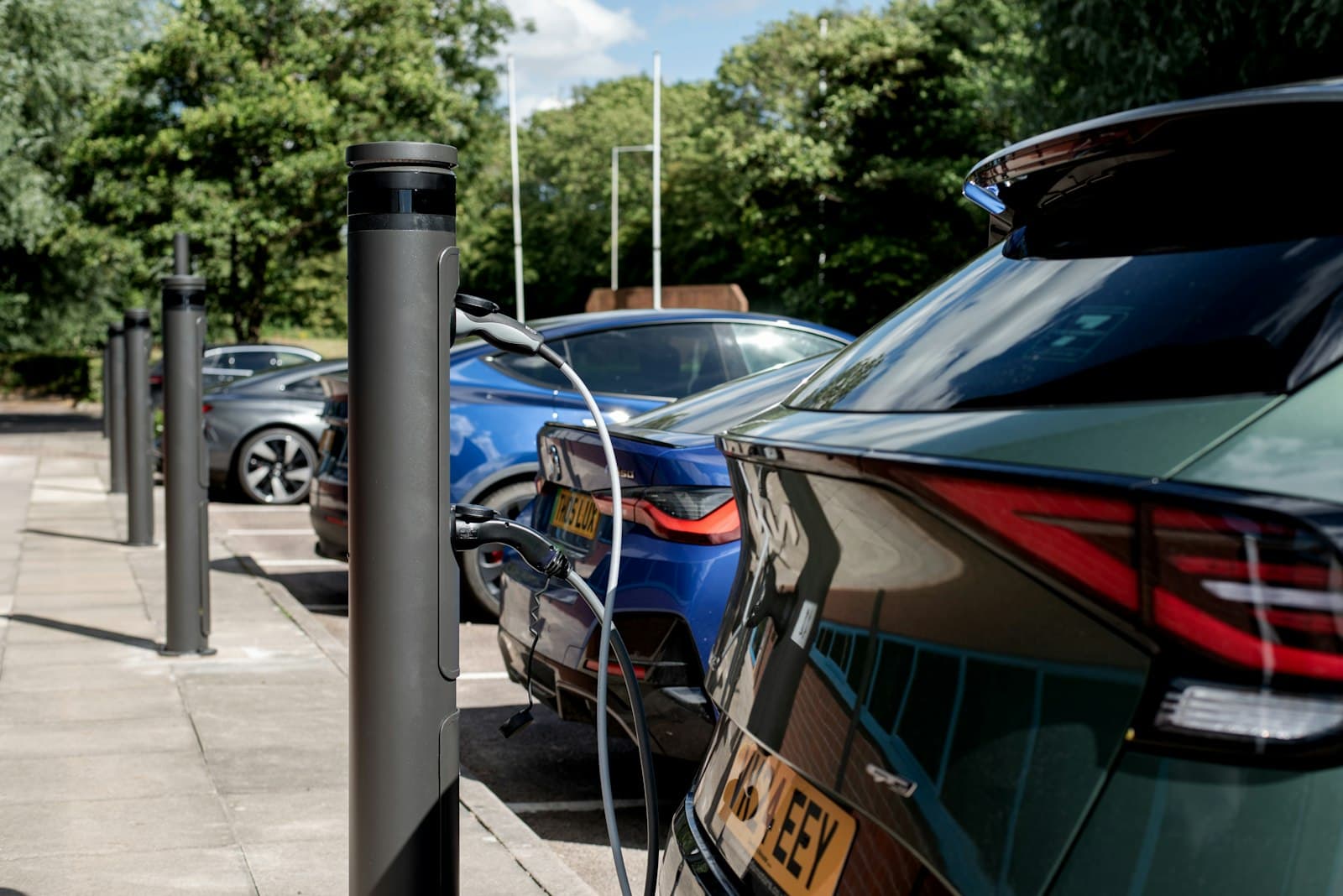
Search for "electric vehicle grants" and you will mostly find advice for drivers. Businesses get a different set of schemes, and they fall into three groups that rarely overlap.
The first pays for chargepoints: sockets on the wall of your car park, at your depot or at the flats you let.
The second pays for cleaner vehicles: switching a van, bus, coach or community minibus to zero emission.
The third pays for the technology itself: research and new factories for batteries, electric motors and the systems that go into vehicles, ships and aircraft.
A plumbing firm with six vans, a coach operator and a battery start-up are all "transport businesses", but each belongs in a different group. This guide explains all three, then lists what is open as this is written.
Chargepoints: the most widely available money
The Office for Zero Emission Vehicles runs the main chargepoint schemes across England, Wales, Scotland and Northern Ireland. They share three rules that catch people out:
- They cannot be backdated. If the chargepoint is already installed, you are too late. Apply first, install second.
- The Channel Islands and the Isle of Man are excluded, even though they feel like part of the UK for most purposes.
- Rates went up in April 2026. The grant per socket rose from £350 to £500. Older guidance online still quotes the lower figure.
Workplace Charging Scheme — up to 75% of the cost of buying and installing chargepoints, capped at £500 per socket and 40 sockets across all your sites. Open to businesses, charities, public sector organisations and small accommodation businesses. This is the scheme's final year: it has been extended one last time, to the end of March 2027.
Chargepoint grant for landlords — the same 75% and £500 per socket, for landlords installing chargepoints at residential properties, with up to 200 sockets a year. You must be registered at Companies House or for VAT. If you applied before April 2026 at the old rate and have not yet installed, you can reapply at the new rate, but tell your installer first: reapplying cancels your existing application.
Depot Charging Scheme — for fleets switching to zero-emission lorries, vans and coaches. The 2026/27 cycle covered 70% of chargepoint and building costs, up to £1 million across all sites, with one application per organisation. That window has closed. The next one is expected to open at the end of October 2026 and run for three months, into late January 2027, for projects starting from April 2027. Its grant rates have not been confirmed, and the scheme says rates will fall over its lifetime, so the earliest windows are likely to be the most generous.
In rural Scotland, Transport Scotland funds a separate workplace charge point grant of up to 100% of the cost, capped at £5,000, for microbusinesses, sole traders and third sector organisations on a Scottish island or in a rural postcode. The chargepoint must be private, for staff or fleet vehicles. Businesses must have nine or fewer full-time employees and have traded for at least two years.
Cleaner vehicles: buses, community transport and city fleets
Help to switch vehicles is narrower, and more of it depends on where you are and what you run.
Plugged-in communities grant fund (Scotland) — covers 100% of the cost, up to £75,000, of a new fully electric car, MPV, minibus or van for a community transport organisation. With accessibility adaptations and a chargepoint, the total can reach £95,000. No match funding is needed, and it is one application per vehicle.
Plug-in Wheelchair Accessible Vehicle Grant — up to £2,500 towards new wheelchair accessible vehicles, where the base vehicle costs under £50,000 before conversion. It applies only at first registration, so a vehicle converted after it was registered does not qualify. Each customer is limited to 20 orders a financial year, which matters for taxi and private hire fleets.
Brum Breathes financial incentives — Birmingham City Council's support for businesses operating in Birmingham to replace light goods vehicles and heavy duty vehicles with ones that meet the city's emission standards.
Scottish zero emission bus funding — the Scottish Zero Emission Bus Challenge Fund has already paid out more than £62 million in its first phase, for 276 zero-emission buses. Bus operators, manufacturers and local authorities should watch for its next phase.
The technology: research and scale-up
If your business builds the technology rather than buying it, the money is larger, more competitive and almost always match funded.
DRIVE35 Scale-up Fund, Drawdown 5 — grants of £2.5 million to £20 million from up to £150 million, closes 4 November 2026. For manufacturing facilities at pilot or demonstration scale for zero-emission vehicle technology: batteries and supercapacitors, electric machines, power electronics, fuel cells, hydrogen storage and the supply chain behind them. The grant covers up to 50% of costs, total eligible costs must be at least £5 million, and you must show the project unlocks at least twice the grant in private investment. Our guide to manufacturing grants for UK businesses covers DRIVE35 alongside battery and materials funding.
Digital Catapult: Digital Twin Industry Challenge Led Accelerator — up to £75,000, closes 27 October 2026. Challenges set by companies in the maritime, aerospace and defence sectors, such as monitoring uncrewed surface vessels or modelling an aircraft's fuel system in service. Sixteen days away as this is written, so only for teams with a solution already in hand.
iX Challenge: digital engineering through simulation — £60,000, closes 6 November 2026. A challenge to build an industrial tool for simulating vehicle and aircraft systems at the design stage, so performance problems show up before anything is built.
Operators, sites and supply chains
A few schemes do not fit the groups above but are worth knowing if they match your business exactly.
Transferable audio-visual equipment on rail replacement coaches — a Department for Transport scheme worth up to £2 million in total, closes 18 December 2026. It helps coach operators in Great Britain buy audio-visual equipment that shows and announces the next stop, which accessibility rules now require, and that can be moved between vehicles. Funding reimburses part of the cost after purchase.
National Highways Lorry Parking Facilities Improvements Scheme — grants of up to 50% of capital costs, from a pot of up to £20 million, for lorry parking operators on or within 5 km of England's strategic road network. It pays for building work, security equipment and more spaces for lorry drivers, not running costs. You must match the grant at least pound for pound and finish the work by March 2031.
HS2 Community and Environment Fund and Business and Local Economy Fund — £45 million in total for communities and local economies disrupted by building HS2's first phases. If your business sits near the line, check whether your area is covered.
Rural and Island Infrastructure Fund (Scotland) — up to £300,000 for public chargepoints in rural and island Scotland combined with battery storage, or storage and solar panels. Unlike the workplace grants above, these chargepoints must be open to the public.
Before you apply
Work out which group you are in. Installing chargepoints, changing vehicles and building new technology are three different applications. Almost no scheme pays for more than one.
Get the order right. Chargepoint grants are lost by installing before the grant is approved. Talk to your installer about the grant before you book the work, not after.
Watch the dates. The Workplace Charging Scheme ends in March 2027. The Depot Charging Scheme opens its next window at the end of October. DRIVE35 projects funded now cannot start until 2027.
Check the region. Several of the most generous schemes, including 100% grants, are Scottish only. If you are in England, look for your city or combined authority's own clean air scheme as well as the national ones.
Finding transport grants on Grants Hub
Transport money is spread across government departments, Innovate UK, Transport Scotland, city councils and infrastructure bodies, and new rounds open every few weeks. Grants Hub lists them alongside 3,700+ live UK funding opportunities from 1,400+ funders, checked daily. Search by what you want to fund, chargepoints, vans or battery research, rather than by funder name, and set an alert so the next round reaches you in time. We take 0% commission on anything you win.